
01 / PRACTICAL GUIDANCE
At delivery: pause and document
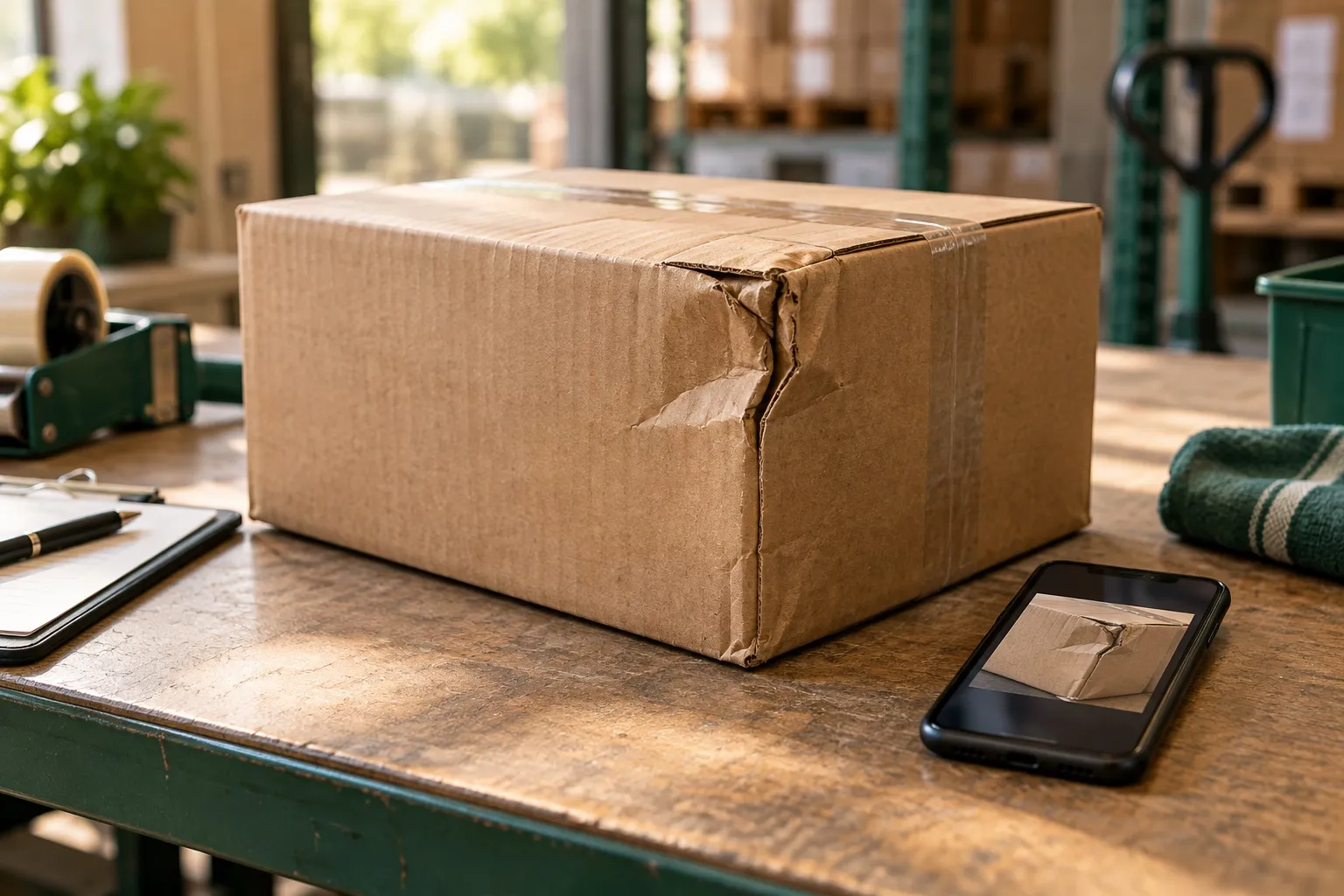
Check the external condition and package count before acknowledging receipt. If safe, compare the goods with the delivery record while the delivery representative is present. Record visible crushing, wet packaging, broken seals or missing pieces precisely. Avoid a clean receipt when a discrepancy is visible.
Do not open a damaged package if there is a safety risk. Follow site safety procedures and seek appropriate assistance for leaking, hazardous or unstable cargo. Protect the remaining goods from further damage without destroying evidence.
- Photograph the overall shipment, damaged areas, labels and seals.
- Record date, time, place, quantities and the people present.
- Note specific exceptions on the delivery receipt and retain a copy.
- Notify the forwarder, carrier and insurer as applicable in writing promptly.
02 / PRACTICAL GUIDANCE
Keep the evidence together
Retain the packaging, pallet, securing materials and damaged goods for inspection. Take photos before and during careful unpacking, showing how the goods were positioned. For a shortage, preserve the count, weight, seal and receiving records; a missing item and an empty package are different facts.
Ask whether a survey is required. Do not discard, sell or repair goods before receiving relevant instructions, unless urgent safety or reasonable mitigation requires action. Record what you did and why. A survey documents condition; it does not itself guarantee acceptance or payment.
03 / PRACTICAL GUIDANCE
Build a usable claim file
- Shipment reference, bill of lading or air waybill and delivery receipt.
- Commercial invoice, packing list and evidence of the affected quantity and value.
- Dated photographs, unpacking records and any survey report.
- Insurance certificate or policy, if arranged, and correspondence with all parties.
- Repair estimate, replacement evidence or other support for the amount claimed.
Separate what is known from what is suspected. Describe the damage and chronology without guessing the cause. Keep copies of every notice and proof of sending. One complete, organised file is easier to assess than a series of disconnected messages.
04 / PRACTICAL GUIDANCE
Notification and legal deadlines are different
Act promptly and check the actual transport and insurance terms. Visible damage, concealed damage, delay and non-delivery can have different requirements. Sending an initial notice does not necessarily complete a claim or stop a legal time limit.
Where it applies, Article 31 requires written complaint for cargo damage promptly after discovery and at the latest within 14 days of receipt; for delay, at the latest within 21 days from when cargo is placed at the recipient’s disposal. Article 35 provides a separate two-year period for bringing an action, with its own starting rules. These are not universal deadlines for every shipment or insurance policy.
For ocean, road, multimodal and insurance claims, obtain the applicable notice and action deadlines immediately. Do not wait for the full loss amount or a survey before asking how to preserve your position. If a deadline is approaching, seek qualified advice on the required action.
05 / PRACTICAL GUIDANCE
What your first notice should contain
Initial incident notice checklist
Identify the shipment and transport document. State when and where the discrepancy was found, what appears affected, and any receipt exceptions. Attach initial photographs and request instructions for inspection, survey and further documents. State that the extent of the loss is still being assessed if that is the case.
Use the claims address or channel required by the relevant party. A message to a sales contact or a chat conversation may not satisfy formal notice requirements. Ask for acknowledgement and keep the record. Our team can help coordinate shipment information; the responsible carrier or insurer assesses liability or cover under its applicable terms.
Make it specific to your shipment.
Share the goods, route and deadline. Our team can help identify what needs confirming before you book.
Talk to Proconnect ↗References & scope
- Montreal Convention 1999 — Articles 31 and 35 ↗
- FIATA FBL — standard conditions, clause 8 (via UTIKAD) ↗
- Lloyd’s — cargo claims and recoveries; Institute Cargo Clauses ↗
General planning guidance. Examples are illustrative, not live rates, contractual terms or confirmation of insurance. The actual shipment terms and applicable law govern. References checked 12 September 2026. Hero images are created illustrations.